Limited Company
 Small Business
 Business Start Up
 Contractors
 Freelancers
 Landlords
 Sole Trader
 Construction Industry
 Accounting
 Bookkeeping
 Payroll/Auto enrolment
 Self-Assessment
 VAT Returns
 Year End Accounts
 Accounting Software
 Tax Advisory
 Find a Professional
 Business Recovery & Company Closures
 IR35 Review
 R & D Tax Credit
 Seed Enterprise Investment Scheme (EIS/SEIS)
 Tax Planning
 Special Purpose Vehicle SPV
 Corporate Advisory
 Business Support Services
 Business Insurance
 Business Plan
 Management Accounts
 Company Formation
 Tax Investigation Cover
 HR and H&S services
 Legal Service Expert
 Free Accounting Software
 Virtual Finance Office
 Our Story
 Achievements
 Charities
 Careers
 Reviews
 Blogs
Blogs Webinars
 Case Studies
 Newsletters
Private Residence Relief (PRR) – Why is it so important?
When selling your property in the UK, the possibility of paying Capital Gains Tax (CGT) can be a significant concern. However, there is a way to reduce or eliminate your CGT liability through Private Residence Relief (PRR). If you meet the criteria, PRR can offer a valuable tax exemption, saving you from paying CGT on the profits from the sale of your property. This guide covers everything you need to know about PRR, how to calculate it, and how it interacts with other reliefs like Letting Relief.

Private residence relief (PRR) in the UK
-in-the-UK.jpg)
Private Residence Relief is a tax relief that can reduce or eliminate the CGT liability when selling a property that has been your only or main residence. The aim of PRR is to allow individuals to sell their homes without having to pay tax on any gain, as long as the property was used primarily as a home during ownership.
PRR can be applied to both individuals and trustees, but not to companies. Importantly, it applies to the gain made on the sale of the property, not the entire sale price. This means that if the property has increased in value since you purchased it, you can potentially avoid CGT on that increase if PRR applies.
Deducting costs from your gain with private residence relief (PRR)
House owner has rights to deduct costs of buying, selling or making improvements in their property from the profits they received after selling it, which includes:
- Fess for estate agents and solicitors
- Costs of maintenance and improvement or extension works (normal maintenance costs like decorating not counted). Interest on a loan to buy your property costs can’t be deducted from the gains. If you have any doubts in deduction rules on certain costs, you can always visit HM Revenue and Customs (HMRC) for clarifications.
If you sell a lease or you home is forcibly purchased then there are special rules for calculating your profits.
Calculate if you need to pay Capital Gain Tax (CGT)
Whether you have to pay or report Capital Gain Tax (CGT) or not, you can find out only if you know your gain and how much tax relief you are entitled to. You can use the CGT calculator to work out how much tax you are liable to pay on your home. You can not use CGT calculator if:
- Other chargeable assets in the tax year are sold by you, such as shares.
- Your share of property that you still jointly own is reduced.
- You claim any deduction or reliefs except Private Residence Relief or Letting Relief.
- You are a trustee, company, agent or personal representative.

Key Conditions for Private Residence Relief
To qualify for full Private Residence Relief, the following conditions must be met:
Your Property Must Be Your Main Residence
You Must Not Have Used the Property Exclusively for Business
The Grounds Should Not Exceed Half a Hectare
Period of Occupation
For more information on how Capital Gains Tax is calculated and how it could affect you,
check out our Capital Gains Tax blog.
What if you are living away from your home?
In some situations, you may not meet all the requirements for full PRR, but you could still qualify for partial PRR. This typically happens when you have used the property for part of your ownership for non-residential purposes or have not lived in it throughout the entire ownership period.
To calculate Partial Private Residence Relief, the gain from the sale is multiplied by the proportion of time the property was your main residence. For example, if you owned the property for 10 years and lived in it for 7 years, you would receive relief for 70% of the gain.

When do you always qualify for relief?
Whether you have one or multiple homes or lived in it or not, you are always entitled for last 18 months relief before you sold your house.
It should have been your only or main place of stay or residence at some point of time in your life while you owned it.
You are entitled for first 12 months relief from the home you owned, if both the following apply:
- Your home was built and renovated or you couldn’t find a buyer for your old home.
- At the end of the 12 months, you lived in it as your only or main residence.
You will be entitled for relief for these periods, even if you have mentioned a different home as you main home or place of stay.
If you own just one home or you nominated your home
Following reasons make you entitled for relief if you were away from your own home:
- For a period of total 3 years for any reason it be.
- If you have to live away from your home in UK for work and this is for up to 4 years.
- any period if you were working outside the UK.
It is necessary that you have lived in your home before and afterwards, unless you were prevented by your work.
If you have just one house you are entitled for last 36 months relief before you sold your home if one of the following apply:
- Your disability.
- You are in long-term home or residential care.
- You sold your home/property before 6 April 2014.
If you own more than one home
Mostly, you are entitled for relief on for one home for any given period. It is suggested that you maintain records of your each property you lived in as your main home. In case of married couples or civil partnership, only one home per couple as main home for any period is entitled for relief.
If you have mentioned a property as your home, you won’t get relief from another property while your home is nominated, besides for the duration that all the time qualified for relief.
There are several other rules that can implicate your tax relief when you sell your home. Contact Capital Gain Tax helpline if you have any doubts about the rules and their purpose.
The Final 9 Months of Ownership
If you’re selling a property that has been your main home, the last 9 months of ownership are automatically covered by Private Residence Relief, even if you weren’t living there during that time. This is useful if you’ve moved out of the property but haven’t sold it right away.
For more about this topic, refer to our Main Residence Relief post.
Nominating a home

If you own more than one property, it’s important to determine which one is your main residence for tax purposes. The concept of Private Residence Relief (PRR) is linked to the property that you designate as your main home. PRR allows you to potentially avoid paying Capital Gains Tax (CGT) when you sell your property, provided it was your main home for part of the time you owned it.
Nominating Your Main Home
If you own multiple homes, you can nominate one property as your main residence for tax purposes. This must be done within 2 years of changing your main residence. Once nominated, the property will be eligible for Private Residence Relief for the time it was your main home.
For example, if you own two properties, one in London and one in the countryside, and you lived in the London home for 5 years and then moved to the countryside home, you can nominate the countryside property as your main home. However, this nomination must be made within 2 years of changing your primary residence.
Properties abroad
From 6 April 2015, only if you have lived in a property or home for at least 90 days in the tax year, you can nominate a home/property abroad.
Letting out your home
If you’ve rented out your home while it was your main residence, you may still qualify for Letting Relief. Letting Relief is an additional relief that can further reduce the CGT liability on the sale of a property.
Letting Relief can apply when part or all of your home was rented out. The maximum amount of Letting Relief is £40,000 (£80,000 for married couples or civil partners), but it’s important to note that this relief only applies to the part of your home that was rented out and was previously your main residence.
If you’re considering renting out your property, it’s crucial to understand the tax implications. Check out our blog on Buy-to-Let Tax Changes and Relief Calculator for more detailed information on tax reliefs for landlords.

Claim letting relief
You will be qualified for the lowest of the below mentioned:
- the amount that you were given in private residence relief (PRR).
- £40,000.
- the same amount as the taxable gain, you earned from letting your property/home.
Relief from letting your property/home does not include any amount of the taxable gain you earn while your home is vacant.
Capital Gains Tax may be affected by other rules that may make you liable to pay. Contact Capital Gains Tax helpline, if you have any doubts about the CGT and its paying methods.
Letting out part of your home
When you let out part of your home/property, you will need to evaluate the proportion you lived in. Then you will be qualified only for private residence relief (PRR) on the part of your gain.
You may be qualified for Lettings Relief too.
Lettings relief – tips and traps
The property or home where you have lived in as your only or main residence at some point of time and which has been let out as residential accommodation can qualify you for Letting Relief, which becomes a valuable relief for its reduced Capital Gains Tax (CGT) that is to be paid on the sale of the home/property.
Tip for maximum relief
To avail maximum relief from the property/home, living in it as an only and main residence for a short period can benefit as it also creates likelihood of claiming letting relief as well as it ensures exemption of the final 18 months of ownership from Capital Gains Taxes.
When used for both purposes
Lettings relief is obtainable when the taxpayer used a part of the property as the only or main residence and part of the same property is let out for use as a residence. The profit from the gain is shared out by mentioning the share of the property used for individual purpose. You can always contact a Capital Gains Tax helpline to understand the calculations in a better way.
Practical advice
You are entitled for lettings relief when all or part of your home/property is let out for residential purposes while another part of the property is used as only and main residence of the taxpayer during a certain period of the ownership. As a result, to make the home or property as the only and main residence for living for the taxpayer for some point of time to bring the gain within the purview of letting relief can be beneficial from a CGT’s point of view.
How to Calculate Private Residence Relief
The calculation for Private Residence Relief is straightforward when you meet the eligibility conditions:
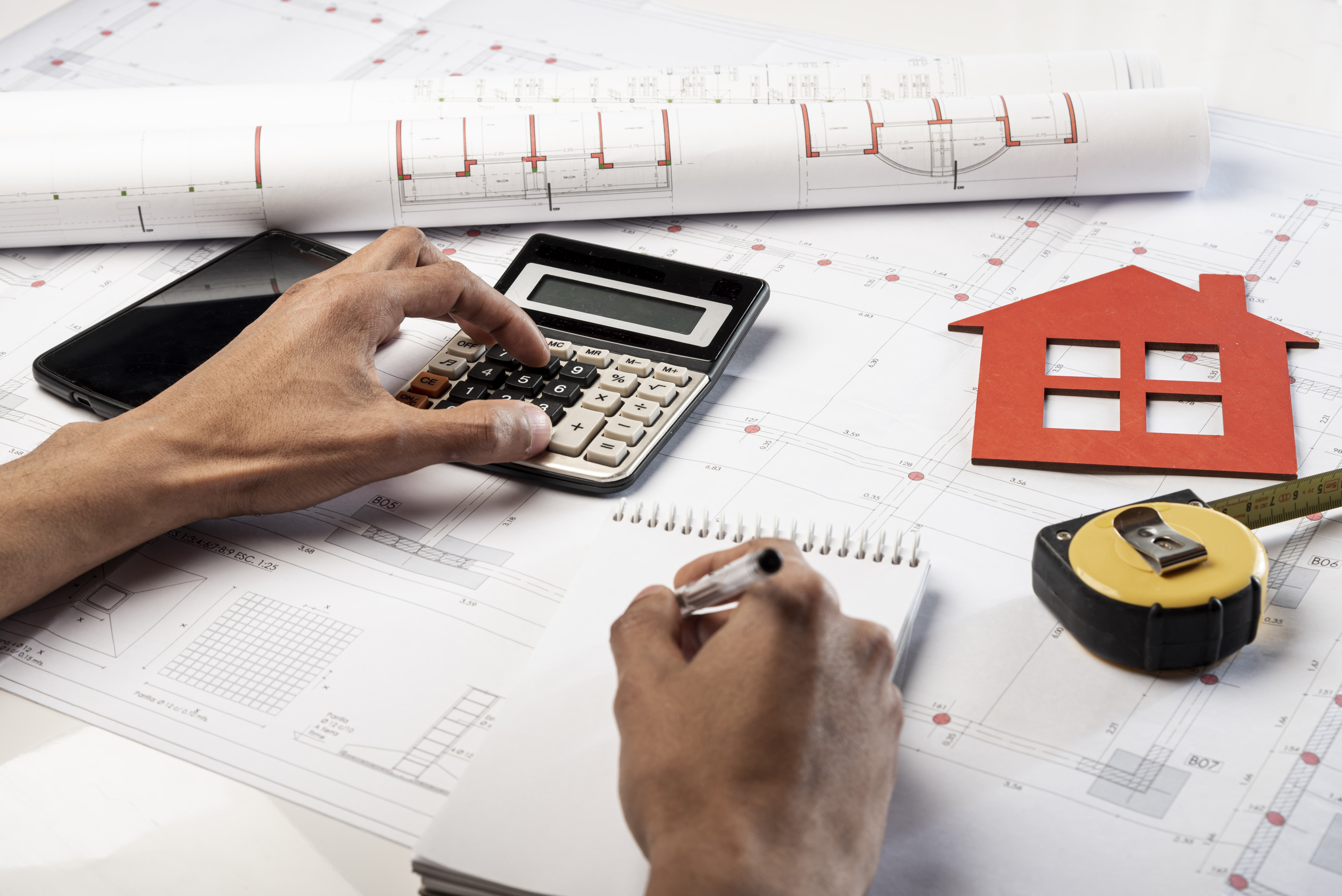
Step 1: Calculate the gain you made from the sale of the property (selling price minus purchase price and any allowable costs such as renovation or improvement costs).
Step 2: Determine the period of ownership and the period you lived in the property as your main residence.
Step 3: Apply the formula:
| Private Residence Relief = | (Period of Ownership) | x Gain on Sale |
| (Period of Occupation) |
For example, if you owned the property for 10 years, lived in it for 7 years, and made a gain of £100,000 on the sale, your PRR would be 70% of that gain (£70,000). The remaining 30% (£30,000) would be subject to CGT.